How to package your Reels so people actually watch
Two coaches can share the same idea, in the same talking-head format, and get very different results. Usually the difference is the packaging.
This guide explains what packaging is, how to find packaging that already works, and how to make the first second of your Reel do its job.
Script & Cut is a creative direction and short-form video service for US coaches.
What packaging is
Packaging is the way you present an idea. It's how the whole video is structured.
It's not the same as format. Format is what the video looks like, for example a talking head. Packaging is the angle you put on the idea.
Here's the same topic, in the same talking-head format, packaged two ways:
- "I accidentally gained 10,000 followers."
- "This is my framework for getting 10,000 followers."
A ranking video is another example. When you rate things from S tier down to F tier, you're using the tier list packaging. You could fill it with any topic.
Use packaging that's already proven
You don't need to invent new packaging. Find a video similar to yours whose packaging has already worked, and use that structure for your topic.
If an "I accidentally did X" video is clearly working, keep the hook close to the original, both the words you say and the text on screen. Then put your own topic and your own story inside it.
Your own account counts too. When one of your Reels does much better than your usual, that's a sign the packaging works for your audience. Use it again.
Leave a little room for your own ideas
As you get better, put a small share of your content toward ideas that are unique to you. Test just a few each week, not many. This is where new packaging that's yours alone shows up, and it's how you become a thought leader. People start copying you because you're doing things differently.
Your main focus should still be reliable, consistent results from packaging that's already proven.
A real example
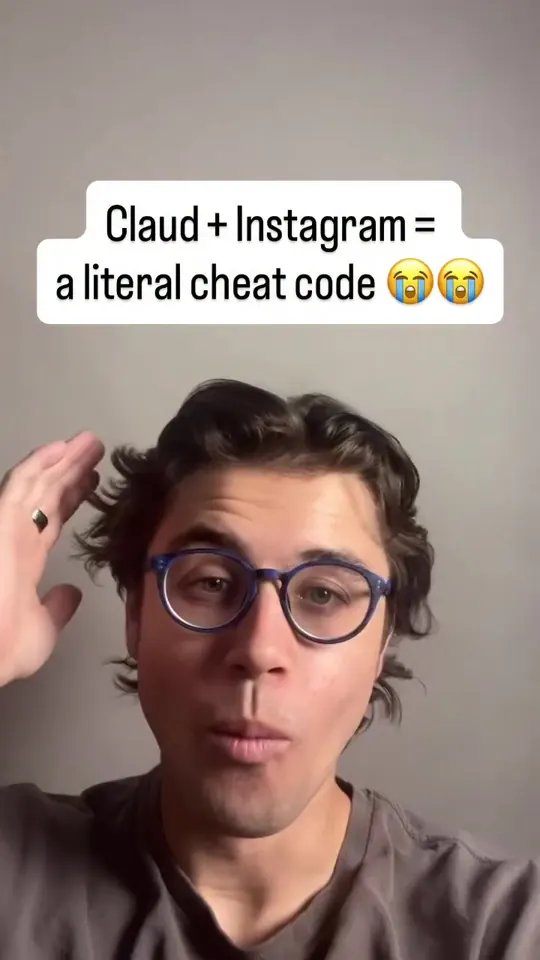
One of our clients, Sean, had a Reel that did far better than his usual. Its packaging was a tech step-by-step: one tool plus another tool gives you a useful shortcut.
So we doubled down on it. We kept the same step-by-step packaging and replaced the old steps with new ones, built around a storytelling bot made with Claude. We knew the packaging worked, so all we had to do was put the new topic into it.
That Reel has 134K views and more than 6,000 comments.
Make the first second explain the packaging
The first frame, the text on screen and the spoken hook should all tell viewers, within the first second, what kind of video this is.
People don't need to know how it ends. They need to know where it's going. When the direction is clear, they stay to see how it plays out.
Think of a video where someone lifts three cups, and the weight of each one is written in front of it. One is ridiculously heavy. She doesn't lift that one first. She starts with the light ones. From the first frame, viewers can see where it's going, so they wait to find out how hard the heavy one is.
That's what a clear first second does. Usually the hook is the fastest way to explain the packaging.
Keep captions simple and familiar
Captions are the words on screen that follow what you say. There are two styles: cinematic, with big animated text, and simple, non-cinematic text. We use simple.
Captions should support the video, not pull attention away from it:
- Placement: a bit below the middle of the screen, around chin level. That's where people's eyes already are, right under where the main action is happening.
- Size: small, not too big.
- Style: classic and familiar, like the standard TikTok captions.
The reason comes from an old copywriting idea. In Breakthrough Advertising, Eugene Schwartz calls it camouflage: newspaper ads did better when they looked like the articles around them. They blended in, so readers didn't skip them as ads. Captions work the same way. When they look like what people already see every day, people keep watching the video instead of noticing the captions.
FAQ
Is packaging the same as format?
No. Format is how the video looks, like a talking head. Packaging is how you present the idea. One format can carry many kinds of packaging.
Is it okay to copy a hook?
Use the structure of hooks that are already working, then make the topic and the story your own.
Where should captions go on a Reel?
A bit below the middle of the screen, around chin level, small and in a familiar style.